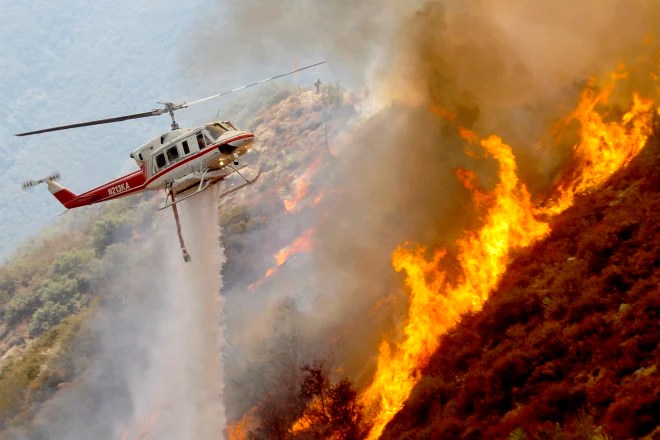
Aviation-supported missions rarely unfold in isolation. Flood response, wildland fire, wilderness search and rescue, law enforcement support, and emergency medical operations all require crews to operate in environments where conditions change rapidly and decisions must be made with limited information and little margin for error.
In these settings, teams are often assembled quickly and may include personnel who have never worked together before. Most agencies do not routinely train side by side. Yet effective operations still depend on a common understanding of roles, expectations, communication discipline, and decision-making frameworks.
Modern SAR, firefighting, law enforcement, and air medical operations—whether large or small—succeed or fail based on internal and interagency communication, coordination, and mission-specific readiness.
That readiness is built through training to standards that hold up in real-world conditions. Standardized skills, procedures, and terminology allow crews to integrate quickly, even when operating across organizations or jurisdictions. When training is consistent and grounded in operational reality, teams are better able to adapt, communicate, and manage risk as situations evolve.
Operations that require multiple skill sets—often executed simultaneously and under time pressure—cannot rely on rote task proficiency alone. They demand training that prepares crews to apply standards in dynamic, unpredictable environments, where priorities shift, information changes, and coordination becomes as critical as technical execution.
Readiness, in these contexts, is not about perfection. It is about consistency, judgment, and the ability to perform to a shared standard when conditions are anything but standard.
Where Mission Readiness Is Built
Training to a shared standard requires more than individual proficiency. It requires exposure to peers facing similar operational challenges, opportunities to exchange perspectives, and environments where real-world scenarios can be examined beyond one organization’s internal experience.
Industry conferences and mission-focused events play an important role in this process. Major international gatherings bring together operators, instructors, regulators, and safety leaders to examine common challenges, evolving risks, and emerging best practices. Mission-specific forums—focused on search and rescue, aerial firefighting, law enforcement, or air medical operations—allow professionals to engage deeply with the realities of their particular operating environments.
Regional conferences further extend this value by addressing geographic, regulatory, and cultural factors that influence operations. These events create space for focused dialogue, shared lessons learned, and training opportunities that reflect local operating conditions while reinforcing globally relevant standards.
Beyond conferences, simulator training centers and specialized mission-training providers offer critical opportunities to translate standards into practice. Scenario-based training allows crews to apply procedures and decision-making frameworks in complex, time-compressed environments where consequences must be managed rather than avoided. When designed around operational reality, these training environments help crews rehearse coordination, communication, and judgment under pressure—long before those skills are needed in the field.
Together, these training pathways reinforce a common objective: preparing aviation professionals to operate safely, consistently, and effectively in missions that demand adaptability, discipline, and teamwork across organizational boundaries.
How Accreditation Reinforces Operational Standards
In several aviation sectors, accreditation provides a mechanism to formalize operational standards into audit-worthy expectations. Rather than relying solely on internal policy or individual experience, accreditation frameworks translate best practices into structured requirements that organizations must demonstrate, sustain, and continuously improve.
Well-designed accreditation programs are not static. Standards are regularly reviewed and updated to reflect changes in equipment, evolving mission profiles, operational risk, and lessons learned from real-world operations. This continuous evolution helps ensure that training, procedures, and oversight remain aligned with the realities crews face in the field—not just regulatory minimums.
For mission-driven operations, accreditation can serve as a unifying structure. It reinforces common terminology, decision-making discipline, and safety culture across organizations that may never train together, but must still integrate effectively when operations scale or conditions deteriorate. In this way, accreditation supports readiness not by dictating how missions are flown, but by strengthening the systems that enable consistent performance under pressure.
Readiness Is a Leadership Decision
Operational readiness is rarely defined by a single skill, aircraft, or piece of equipment. It is the result of deliberate choices made over time—about how organizations train, how standards are applied, and how well teams are prepared to operate when conditions are complex and dynamic.
In mission-driven operations such as search and rescue, firefighting, law enforcement, and air medical response, success depends on more than technical proficiency. It depends on the ability to communicate clearly, coordinate effectively, and apply shared standards under pressure—often alongside agencies and crews who have never worked together before.
Training to realistic standards, engaging in professional development with peers, and supporting systems that reinforce consistency and accountability all contribute to that readiness. These investments may not be visible during routine operations, but they become critically important when missions scale, timelines compress, and decisions carry lasting consequences.
Readiness is not created at the moment a mission begins.
It is built long before—through preparation, discipline, and leadership commitment to doing the work before it is needed.


Leave a comment