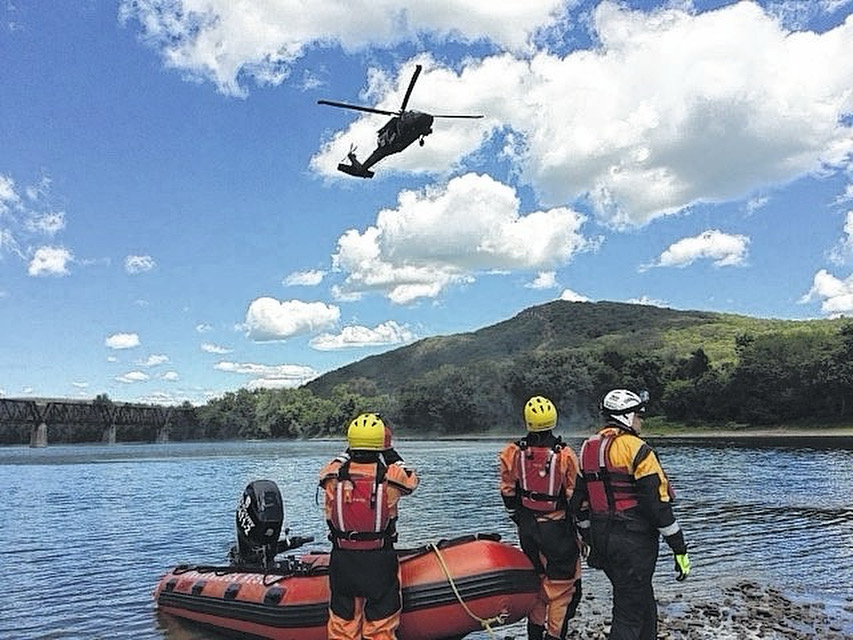
Around the world, flood response operations in 2025 have revealed a clear truth: when disaster strikes, readiness is everything. From coastlines and river valleys to mountain towns and remote communities, emergency teams continue to confront complex rescue environments that test skill, coordination, and endurance.
These events aren’t isolated. They form a pattern, one that reinforces why mission-specific training and cross-discipline coordination matter more than ever.
A Global Snapshot
United States : In recent weeks, U.S. operations have shifted from active rescue to recovery following a series of regional storms. Helicopter crews, swiftwater teams, and volunteer responders continue to assist in cleanup and risk mitigation from New Jersey to Arizona.
In Southern California, early-season atmospheric river storms mobilized over 200 responders, including specialized flood and hoist teams. In Globe, Arizona, National Guard personnel and volunteers coordinated evacuations and debris removal under hazardous terrain conditions. Each mission reinforced the value of prepared crews trained to operate in unfamiliar or degraded environments.
Canada: In British Columbia, sudden flooding in Bugaboo Provincial Park stranded hikers in alpine terrain, requiring multiple helicopter hoists to safety. Meanwhile, Saskatchewan’s spring floods and continuing recovery efforts highlighted the enduring need for swiftwater vehicle extraction and rural coordination training.
Across Canada, aerial SAR teams and volunteer ground units faced challenges similar to those seen in the U.S. emphasizing the importance of integrated air-ground operations and scenario-based drills.
Asia: Flooding and monsoon events from Pakistan to Vietnam have driven extensive SAR activity, including large-scale evacuations by air and boat. Helicopter operations in mountainous regions and coastal flood zones demanded low-altitude precision flying and sustained teamwork under pressure.
These incidents underscore the global demand for hoist proficiency, crew coordination, and rapid decision-making in dynamic flood conditions.
Europe, Australia, and South America:
• In Europe, recovery from late-September floods in Germany and France led to renewed training on floodwater rescue standards and technology integration.
• In Australia, ongoing training through the Disaster Ready F emergency programs shows how simulation, digital mapping, and interagency drills improve coordination before the next flood season.
• South America, Venezuela and Mexico faced deadly rain-induced disasters highlighting the need for urban flood and confined-space rescue training in areas with limited infrastructure.
Training Implications
Every one of these operations, from rural Arizona to the Himalayas, reflects a shared reality: training saves lives before the mission begins.
• Scenario-Based Learning: Teams that train under realistic conditions perform better under stress.
• Cross-Agency Coordination: Shared terminology and command structures prevent confusion during large-scale rescues.
• Aviation Readiness: Helicopter and drone crews trained in hoist techniques, mapping, and weather assessment become critical links in the chain of survival.
• Sustainment and Recovery: Long-term missions, like those still underway in Texas and Saskatchewan, require ongoing planning, resource management, and post-event assessment training.
Looking Ahead
Floods will always test readiness — but they also reveal progress. Around the world, responders continue to refine the art of coordination, combining technology, training, and teamwork to reach those in need.
These operations remind us that aviation is more than transportation — it’s a bridge between crisis and recovery.
The lessons of 2025 are clear:
• Prepare with purpose.
• Train for the unexpected.
• And always, always stay mission ready.


Leave a comment