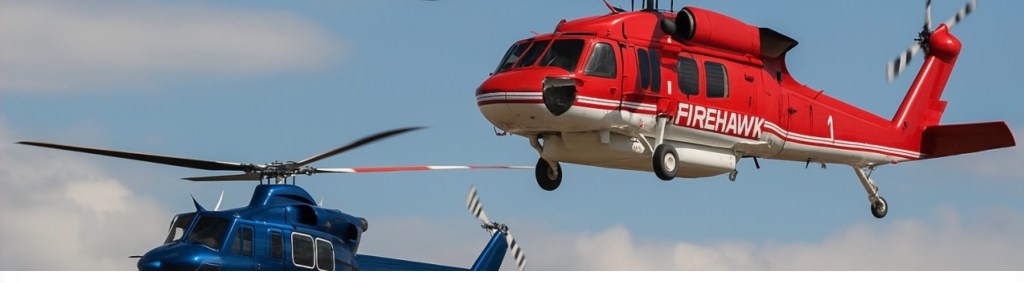
Taking delivery of a new helicopter—whether factory-fresh or previously operated—is an exciting milestone. It represents growth, expanded capability, and the opportunity to take on new missions.
Fortunately, many aircraft manufacturers offer outstanding type-specific training as part of the delivery process. Pilots and maintenance personnel receive structured ground school, in-aircraft training, and often simulation. These programs ensure crews understand how the aircraft operates—especially when new technology is involved.
With each generation of rotorcraft comes greater complexity: integrated flight systems, digital engine monitoring, NVGs, onboard sensors, and mission-specific interfaces. Manufacturer training helps build the foundational knowledge every crew needs.
So you get your aircraft delivered… then what?
You complete training. You fly home. You return to your base. Now what?
This is where the next phase begins: mission-specific training. That’s the part that turns technical knowledge into operational readiness.
Bridging the Gap Between Aircraft and Operation
Every mission is different. And while aircraft training teaches how the machine works, mission training prepares your team to use it under pressure, in your environment, with your mission profile.
• Law Enforcement: Search and apprehend tactics, FLIR and spotlight integration, airborne-ground unit coordination.
• Search and Rescue (SAR): Hoist operations, crew communication, NVG flights over water, terrain, or at night.
• Offshore Operations: Deck landings, emergency egress, fuel management, low-altitude overwater navigation.
• Aerial Firefighting: Coordinating water drops, bucket ops, belly tanks, and ground crew communication in high-stress environments.
• Utility and HEC (Human External Cargo): Longline operations, precision lifting, team insertion/extraction, and safety protocols.
• Military or Tactical Support: Formation flying, airborne use-of-force, tactical insertions, and joint operations training.
These real-world scenarios go far beyond the aircraft manual. They prepare crews for complex, unpredictable conditions where training becomes the critical difference between mission success and failure.
This Is a Global Reality
Around the world, public safety and security agencies—from federal police to coast guards—use helicopters for law enforcement, surveillance, and SAR. These operators often face vast coverage areas, evolving threats, and minimal room for error.
In the civilian world, contractors supporting offshore energy must also be ready to deploy for rescue, medevac, and evacuation missions. The stakes are high, and so is the demand for specialized, hands-on training.
Training Is a Continuum, Not a Checkbox
Initial aircraft training is essential. But it’s just the beginning. Mission training builds on that foundation to create a crew that’s prepared, proficient, and confident.
The most successful operators:
• Begin with manufacturer training
• Continue with regular aircraft-specific refreshers
• Extend into scenario-based, mission-tailored training
This full-spectrum approach supports safety, efficiency, and true operational readiness.
Final Thought
A helicopter is more than a machine it is a tool with a purpose. And that purpose is defined by the mission.
Manufacturer training teaches you to fly the aircraft. Mission training prepares you to use it when it really counts.
The real test of readiness happens after the aircraft arrives—when the mission starts.
Whether it’s SAR, utility, firefighting, or law enforcement, scenario-based mission training builds the confidence and coordination crews need in real-world conditions.
What does mission training look like in your operation?


Leave a comment