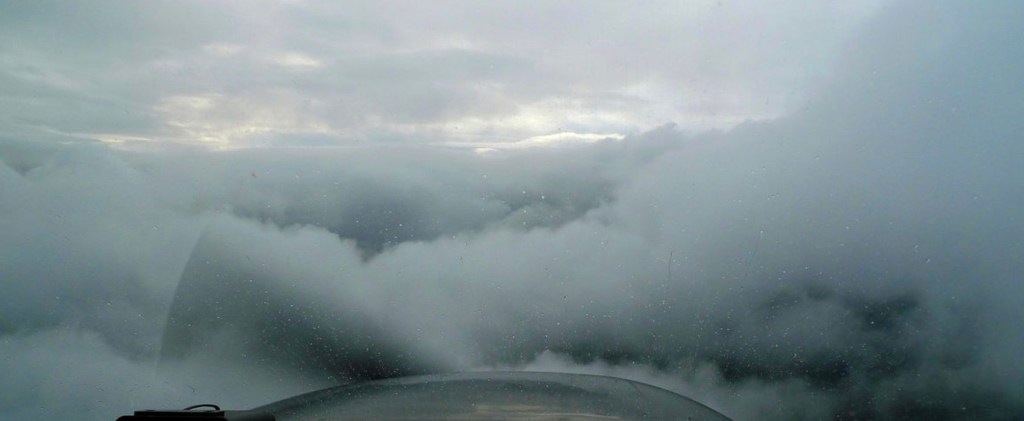
Recent accidents have shown that there continues to be a problem with pilots that have limited IFR experience losing control of aircraft when poor visibility conditions are encountered. Helicopter pilots are more susceptible because of the majority of operations are low-level VFR. The following statement from the International Helicopter Safety Team puts it in perspective.
“Inadvertent IMC encounters are some of the most demanding, disorienting, and dangerous conditions a pilot can experience. These encounters result in the highest percentage of fatal injuries from helicopter accidents. NTSB 2011 figures show that 45 of the 52 IIMC accidents occurring that year were fatal ….that is 86% giving you a 14% survivability rate if you go IIMC! Comprehensive training on inadvertent flight into instrument meteorological conditions (IIMC) is necessary for all rotorcraft helicopter training. This training should include, but not limited to: •Determination of enroute weather •Avoidance of inadvertent flight into instrument meteorological conditions. •In-flight weather abort procedures. •Recovery from inadvertent flight into instrument meteorological conditions. “… http://www.ihst.org/
Training to avoid the situation, as well as what to do in the event it was not avoided, is the most effective solution. An instrument rating is always the best layer of safety when dealing with instrument meteorological conditions (IMC); however Inadvertent IMC is an important training event for both instrument rated pilots and those without the rating. Regulatory agencies, insurance providers and safety committees agree there should be a strong focus on Inadvertent IMC training in simulators. Practicing the perishable skills of flying without outside visual reference should be done in scenario-based segments that match the type of operation.
This hands-on practice should be complemented by a fairly robust ground study segment. In addition to practical skills, the training should include a series of informational sessions to improve the handling of the situation when it occurs. It is critical to have a thorough understanding of the facts, the rules and the human factors involved in the unplanned event.
There are various subjects that should be reviewed in detail when teaching inadvertent IMC. Weather avoidance is the most important and can help to evade the situation completely. If the situation cannot be avoided, a pilot should be thoroughly familiar with the procedures to get them to safety. These procedures should include diverting around weather or landing as soon as possible. It is important to discuss all the options for an IMC encounter. Pilots have several primary options for escaping Inadvertent IMC. Prior to entering IMC reversing course may be a good option. However, once encountered one must commit to instruments and climb to a minimum safe altitude.
Descending is considered dangerous because it involves flying closer to terrain that may not be visible. Climbing to a safe altitude away from obstacles is considered to be the safest option. Regardless of technique, maintaining positive aircraft control is the highest priority. All of these topics should be the focus of interactive discussion on choices and decisions.
Preflight planning details are another area of discussion that can incorporate professional discipline. Pilots must be prepared to recognize and accept inadvertent IMC encounters in a reliably controlled and practiced manner whenever they occur. Pilots should be prepared for an IIMC event on every flight. Classroom dialogue on preflight planning can be a great transition to discussion on aeronautical decision making and the judgment to start or continue a flight into marginal conditions.
There should also be time to include a segment on crew resource management. This section should take into consideration the type of operation and the number of crew members. The Single Pilot CRM element would focus mainly on the managing of resources that can assist the sole pilot in the primary directive of “Fly the Aircraft”. These resources might include checklists or assistance from non-flying personnel. In a two pilot situation, multi-crew CRM should discuss the various roles of the crewmembers in the inadvertent IMC situation including who would be the pilot flying. Designated duties for each of the pilots should always be briefed in advance of the flight. If there is other non-flight personnel required such as in air medical operations, their roles should be clearly identified in an inadvertent IMC situation.
Another portion of the ground school should consider the human factor elements that are prevalent in the stress of an inadvertent IMC encounter. This should include the importance of maintaining situational awareness and its effect on decision making. In this section, two key areas of discussion should be included; avoiding the IMC condition and having a solid plan if the IMC circumstances cannot be avoided. Pilots who remain calm, follow procedures and make subtle input changes are more likely to maintain positive control while seeking safer skies.
Communication skills are also crucial to surviving IIMC including the standard communication procedures for entering IFR conditions. The universal safety standard per the International Helicopter Safety Team (IHST) states “After the pilot has control of the aircraft, initiated a climb, and on course, they should communicate with Air Traffic Control (ATC) regarding their intentions and need for assistance.” It is essential to discuss the ability to put egos aside and request assistance from ATC and ensure they fully understand the situation is an emergency. ATC should be told that the aircraft is VFR and requires immediate assistance.
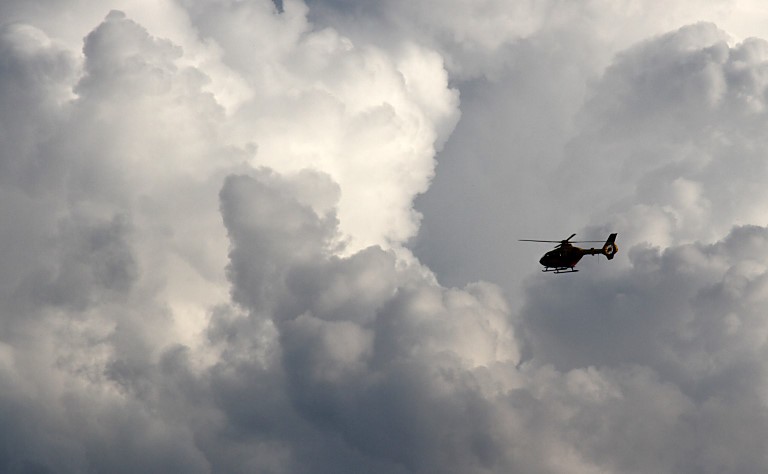
Another area to discuss is spatial orientation. It is often taken for granted especially for pilots that fly mostly day VFR. Visual references provide the most important sensory information to maintain spatial orientation on the ground and during flight, especially when the body and/or the environment are in motion. Even birds are unable to maintain spatial orientation and fly safely when deprived of vision (due to clouds or fog). Therefore, it should not be any surprise to us that, when we fly under conditions of limited visibility, we have problems maintaining spatial orientation. Spatial orientation is also more difficult at night than during daylight hours. Night visibility is often equal to IMC if the visible cues are missing. A thorough understanding of our physical limitations is necessary to make a reasonable assessment of the skills necessary to safely complete a flight.
Just as visual cues are a fundamental part of maintaining orientation, visual images are often the key to any type of ground study training. In an aircraft or simulator, there is immediate sensory input that can help impress the principles that are being taught. In a classroom environment photos and visual aids are very important. An IIMC class should include strong visuals such as accident reports and resulting photos that drive home the point that this is a serious matter. Everyone is susceptible and can find themselves in an IIMC situation.
In any Inadvertent IMC training, scenario-based practice in a simulator will provide the muscle memory to aid the pilot in performing the necessary tasks. The classroom segment will reinforce the thought process that goes into performing the tasks safely. Understanding the risks, the skills and limitations can lead to making the correct and safe decision. Flying scared and prepared is safer than flying blind and out of control.


Leave a comment